











Karmic Astrology represents one of the most profound and introspective branches of astrological study. It explores the deeper reasons behind our life experiences, challenges, and relationships by connecting them to the ongoing evolution of the soul across time. While mainstream science often dismisses this mystical approach due to its reliance on concepts like reincarnation and unseen spiritual forces, many people find it offers meaningful insights into personal growth, recurring patterns, and life purpose.
Engaging with Karmic Astrology invites us to consider that our current circumstances are not random. They may reflect unfinished lessons, unresolved emotions, or energetic imprints carried forward from previous experiences—whether we interpret those as literal past lives or as layers of the subconscious mind active in the present moment.
Reincarnation and the Eternal Now
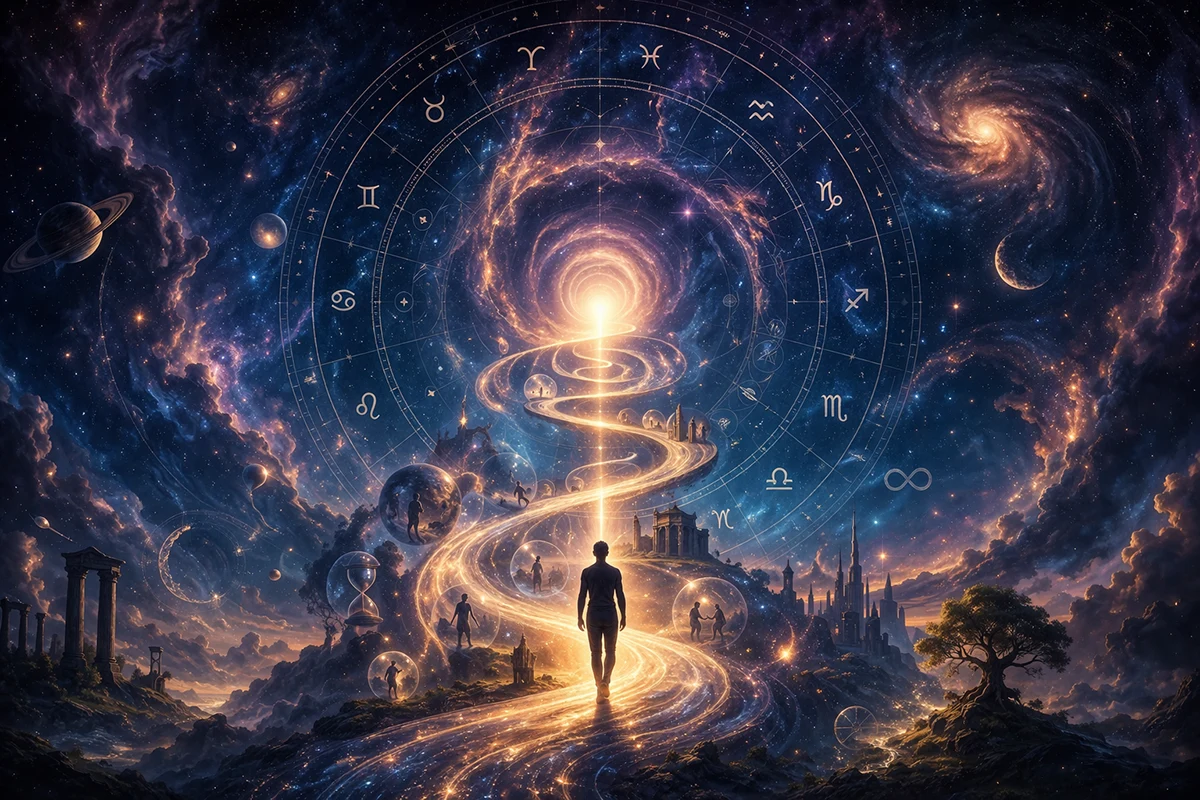
Traditional Karmic Astrology often speaks of reincarnation—the idea that the soul returns in new forms to learn, balance, and grow. However, a more accessible way to work with these principles is to view “past lives” as symbolic representations of deep subconscious patterns that influence us today.
Our mind holds countless layers of memory, emotion, and experience. Techniques such as past-life regression or karmic chart analysis help bring these hidden elements into awareness, allowing us to better understand why certain situations, fears, or attractions repeat in our lives. Even if we cannot prove literal past incarnations, the psychological and emotional truths revealed through this lens can be remarkably healing and empowering.
Importantly, we do not need to look only at distant lifetimes. Karmic principles apply equally to recent events—actions taken yesterday, decisions made in childhood, or patterns formed in adolescence. Every choice we make creates consequences that shape our future. By compressing the idea of multiple lifetimes into a single life, we can observe how today’s thoughts and behaviors are actively building the “karma” we will encounter tomorrow.
Key Elements in a Karmic Birth Chart
In Karmic Astrology, certain chart factors receive special attention because they illuminate hidden influences and soul-level lessons:
- The Lunar Nodes (North and South Node): The nodal axis is often considered the backbone of karmic interpretation. The South Node points to familiar patterns, talents, and tendencies brought from previous experiences, while the North Node indicates the direction of soul growth and new lessons to be embraced in this lifetime.
- Retrograde Planets: Retrograde motion in the natal chart is frequently interpreted as energy that turns inward or refers to unfinished matters from earlier times. These planets often highlight areas where we must revisit, reflect, and resolve past imbalances.
- Mars and Saturn: These planets are closely linked to karma. Mars represents action, desire, and conflict—how we assert ourselves and the consequences of those actions. Saturn symbolizes responsibility, limitations, and long-term lessons, often pointing to areas where we must repay debts or build discipline and maturity.
- Separating Aspects: Aspects that are separating (moving apart) are sometimes seen as energies that have already been set in motion in the past, carrying forward their effects into the present.
- The Moon: As a symbol of the soul and emotional core, the Moon plays a central role. Its last conjunction before birth can indicate the final “imprint” the soul carried into this life, while its next upcoming conjunction may point to the primary lesson still to be learned.
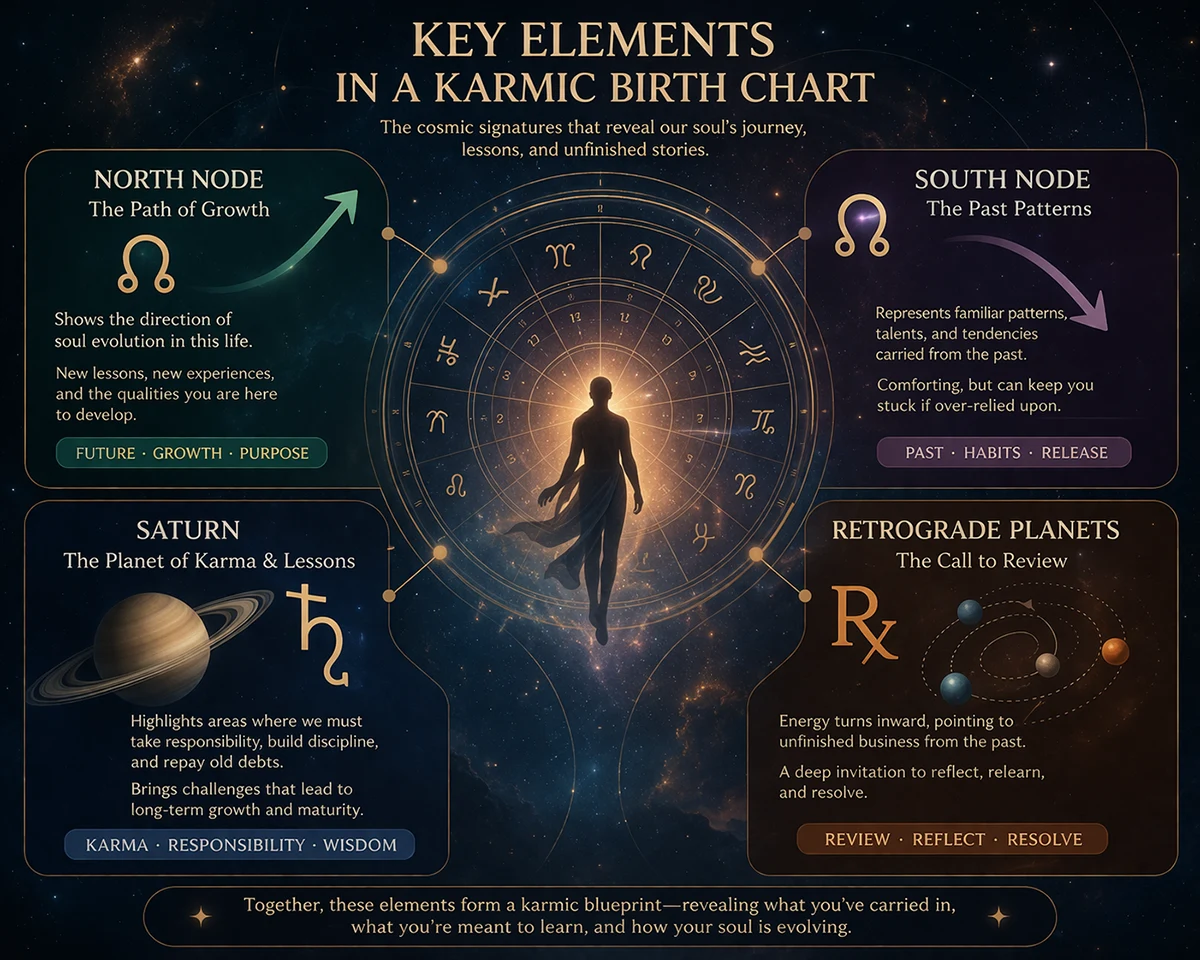
These factors together create a map of the soul’s deeper story—revealing what has been carried forward and what needs attention for continued evolution.
The Significance of Houses in Karmic Analysis
Houses in the natal chart represent the arenas of life where our soul’s lessons unfold. In Karmic Astrology, they are viewed as a continuous cycle of cause and effect. The experiences and actions associated with one house naturally influence the conditions we encounter in the following house.
For example, the way we handle matters of intimacy, shared resources, transformation, and endings in the 8th house may directly shape the quality of our partnerships and one-on-one relationships in the 7th house in this lifetime—or vice versa, depending on the karmic flow being examined. This sequential relationship between houses helps us trace how past actions (or inactions) have created the circumstances we face today, and how our current choices will influence future outcomes.
Many astrologers use the Placidus house system for karmic readings because it reflects the specific time and place of birth, which some believe carries psychological and philosophical significance. Others prefer equal house systems, emphasizing that soul lessons transcend geographic location. Whichever system resonates, the houses remain essential for understanding the practical, day-to-day expression of karmic themes.
The Soul’s Evolutionary Path
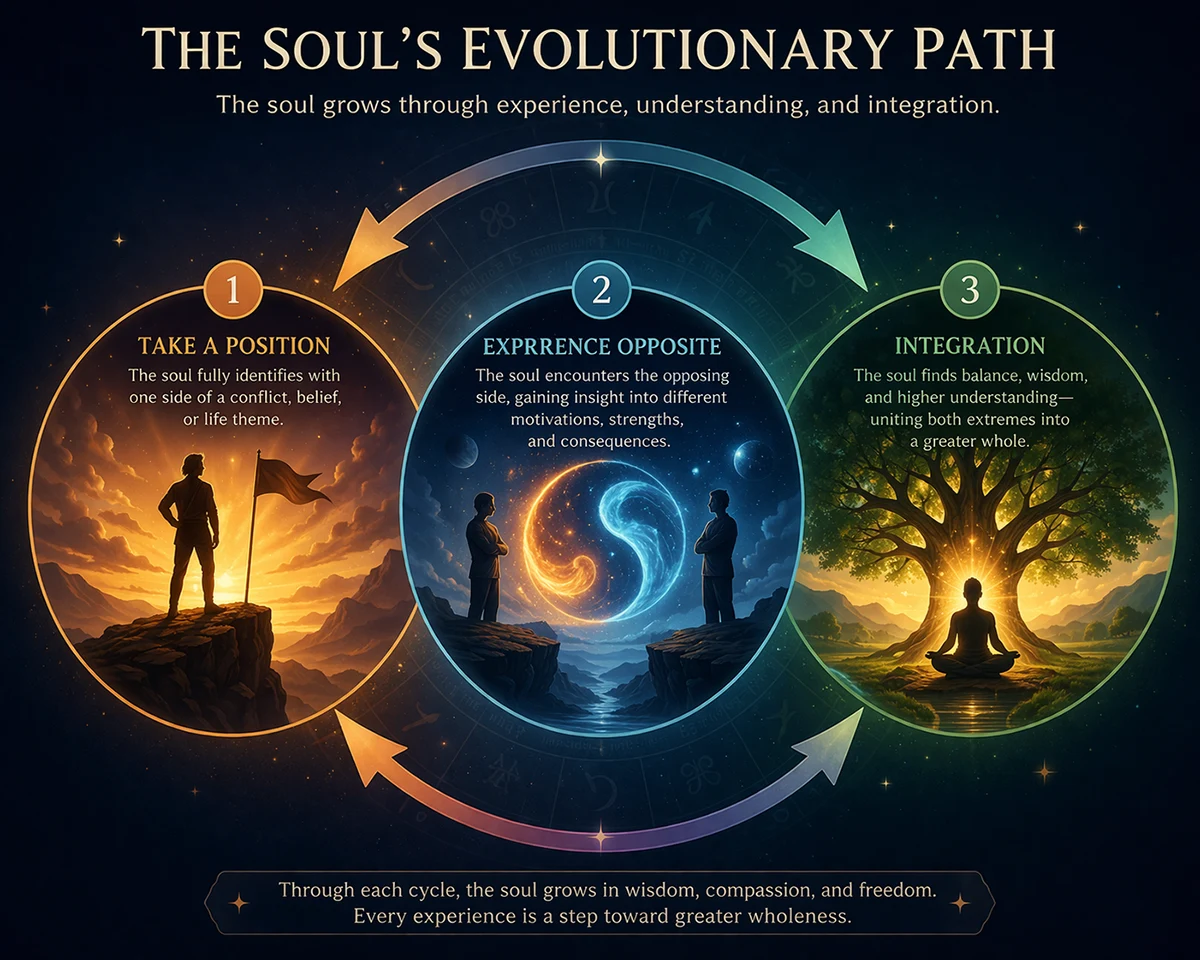
At its core, Karmic Astrology teaches that the soul evolves through repeated experiences that build wisdom, compassion, and balance. A helpful way to understand this process is to consider lessons unfolding across a series of phases—symbolically represented as three interconnected “lives” or stages:
- Taking a Position: In the first stage, the soul strongly identifies with one side of a conflict, belief, or life theme—fully immersing itself in a particular perspective, role, or experience.
- Experiencing the Opposite: In the next stage, the soul encounters the opposing side, gaining insight into different motivations, strengths, weaknesses, and consequences. This brings greater empathy and a more nuanced understanding.
- Integration and Resolution: Only after experiencing both extremes can the soul reach the middle ground, finding balanced solutions, forgiveness, and higher wisdom. This third stage allows for true resolution and prepares the soul for the next level of evolution.
This pattern applies to many areas of life—relationships, power dynamics, moral dilemmas, career paths, and personal identity. The goal is not to avoid difficult roles but to engage with them consciously, with integrity, respect, and understanding for all involved—including those we perceive as opponents.
By approaching every experience with nobility, tolerance, and mindful choices, we transform challenges into opportunities for growth. This conscious participation helps us resolve old karmic patterns and move forward with greater freedom and awareness.
Working with Karmic Astrology in Daily Life
Karmic Astrology is ultimately a tool for self-awareness and empowerment rather than fatalism. It encourages us to:
- Recognize recurring patterns and their possible deeper roots
- Take responsibility for our actions and their long-term consequences
- Approach challenges as opportunities to learn and balance past imbalances
- Develop compassion—for ourselves and others—by understanding the soul’s long journey
- Make conscious choices that support positive future outcomes
Whether you view karma through a spiritual, psychological, or philosophical lens, this branch of astrology offers a compassionate framework for understanding why life unfolds as it does and how we can participate more consciously in our own evolution.
By exploring these karmic indicators in your chart, you gain valuable perspective on your strengths, challenges, and soul purpose—empowering you to live with greater intention, wisdom, and inner peace.
