











What Is Natal Astrology?
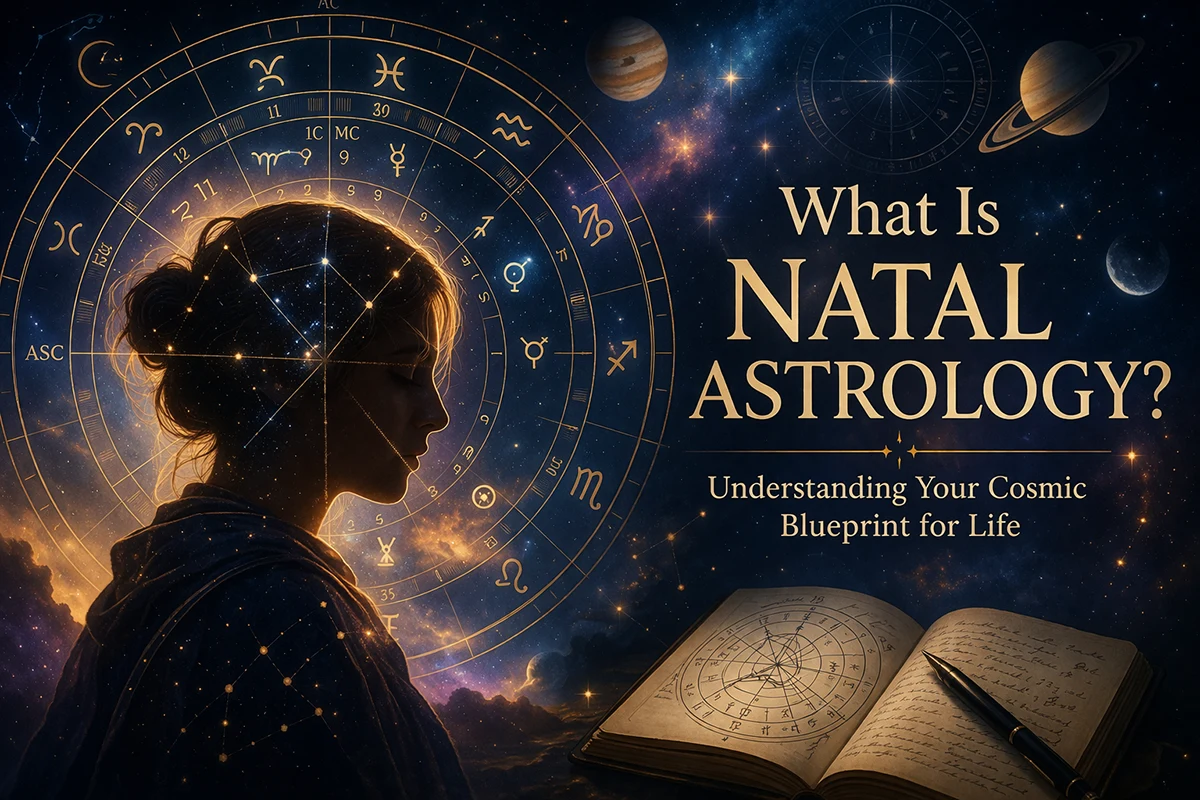
Natal astrology is one of the most widely practiced branches of astrology. It centers on analyzing a person’s natal chart — a snapshot of the sky at the exact moment of birth — to uncover core personality traits, innate potentials, hidden challenges, and pathways for personal development. Rather than focusing primarily on future predictions, it helps individuals understand who they are at a fundamental level and how they can live more authentically.
While many astrologers blend natal insights with predictive techniques, the two approaches differ significantly in purpose. Natal astrology explores character, emotional patterns, strengths, and life themes, whereas predictive methods look toward timing and external events. This distinction allows for deeper self-awareness without turning the practice into fortune-telling.
How Does Natal Astrology Work?
Natal astrology is grounded in the principle of synchronicity, which suggests that the moment we take our first breath is meaningfully connected to the positions of the planets and stars. Even people born on the same day will have vastly different charts due to variations in exact birth time and location. These subtle differences, combined with family background, upbringing, culture, and life experiences, shape how planetary energies express themselves uniquely in each individual.
Every element in a natal chart — planets, signs, houses, and aspects — carries multiple layers of meaning. We experience these energies daily through our habits, relationships, emotional reactions, recurring situations, and personal growth opportunities. By recognizing these patterns, we can transform abstract astrological symbols into practical tools for understanding ourselves and navigating life more consciously.
Overcoming Fear When Working with Natal Charts
Fear often arises during natal astrology consultations. Clients may feel anxious about what challenging placements might reveal, while astrologers themselves can become uneasy when they spot difficult planetary configurations involving sensitive points like the Moon or the ruler of the Ascendant.
The essential perspective to remember is this: you are already living your natal chart every day of your life. Its energies are deeply integrated into your being from the moment of birth. Just as you cannot separate yourself from your physical body in this lifetime, you cannot escape the blueprint of your chart — and there is no need to. Instead of fearing it, the goal is to understand, accept, and consciously work with its gifts and lessons.
Planetary positions in the natal chart serve as our foundational “starting point” or inner landscape. From here, all life experiences unfold. Difficult aspects bring valuable growth opportunities and important life lessons, while harmonious placements offer natural talents and moments of joy. Truly disruptive events rarely manifest unless strongly indicated in the natal chart and supported by consistent confirmation from several predictive techniques. This awareness shifts the focus from fear to empowerment and personal responsibility.
The Relationship Between Astrologer and Client
A meaningful natal astrology reading is built on mutual respect, trust, and clear communication. The interaction between astrologer and client forms a unique relationship in which both individuals activate planetary energies within each other’s charts. The astrologer brings interpretive insight and professional perspective, while the client shares their lived experiences and personal context.
Like any healthy relationship, this connection thrives when approached with empathy, professionalism, and genuine care. The astrologer’s primary responsibility is to illuminate possibilities and patterns while respecting the client’s autonomy and avoiding any interference in their personal decisions.
Main Challenges Faced by Astrologers
Practicing natal astrology ethically involves two significant challenges. The first is emotional: clients often arrive feeling vulnerable and hopeful, seeking guidance during important or difficult periods of life. Astrologers must respond with deep compassion, sensitivity, and ethical awareness to create a safe space and prevent any unintended emotional harm.
The second challenge stems from the blend of trust and responsibility. Many clients invest significant hope in astrological guidance, which can make them particularly sensitive to language that might damage their self-esteem or create unnecessary worry. A responsible astrologer must communicate honestly and clearly that astrology does not dictate a fixed destiny. Every individual remains fully in charge of their own choices, actions, and life direction. The chart offers awareness and tools — never predetermined outcomes or directives.
Essential Preparation: Reading Your Own Chart First
Before interpreting anyone else’s natal chart, a conscientious astrologer should thoroughly explore their own. Self-analysis reveals personal strengths, vulnerabilities, biases, and the real-world ways astrological energies operate in daily life. This process builds ethical grounding, fosters genuine empathy, and often leads to exciting personal discoveries that enhance every future reading.
Regular self-reflection through your own chart also helps maintain humility and improves the ability to connect meaningfully and responsibly with clients.
How to Approach a Natal Chart Reading
A balanced natal chart reading usually begins with the Ascendant (Rising Sign), which symbolizes the moment of first breath and represents our physical body, outward personality, and general approach to life. The entire first house, along with its ruling planet, provides essential clues about our core identity and primary life focus.
Examining the Ascendant ruler — including its sign, house placement, essential dignities, and all aspects — reveals the dominant planetary energy that influences much of our life journey. Both supportive and challenging aspects must be considered to build a complete and realistic picture.
However, no single placement defines a person entirely. A full natal chart includes the Sun, Moon, planets, houses, and numerous aspects — each contributing a unique piece to our complex personality. Integrating all these elements requires more than pure intellectual analysis.
The most powerful and compassionate readings combine solid astrological knowledge with attentive listening. By truly hearing the client’s story, current life situation, and emotional state, the astrologer can translate real-life experiences back into the symbolic language of the chart. This collaborative approach ensures the reading feels relevant, respectful, and genuinely supportive.
In the end, natal astrology serves as a profound tool for self-understanding, healing, and conscious living. When practiced with integrity and compassion, it empowers individuals to embrace their full potential, navigate challenges with wisdom, and live with greater authenticity and purpose.
