











Relationship Astrology goes beyond analyzing a single person’s personality. It explores the dynamic energy between two or more individuals, revealing areas of natural harmony, potential challenges, and opportunities for growth. By examining how two birth charts interact, this branch of astrology helps us understand the unique “middle ground” that forms in any partnership—whether romantic, familial, professional, or platonic.
The Zodiac and Human Connections
The zodiac itself is built on relationships. The 12 signs form six pairs of opposites, each representing a fundamental type of interaction and lesson. These polarities show how every sign relates to others, creating a rich tapestry of energies that influence how we connect with people around us.
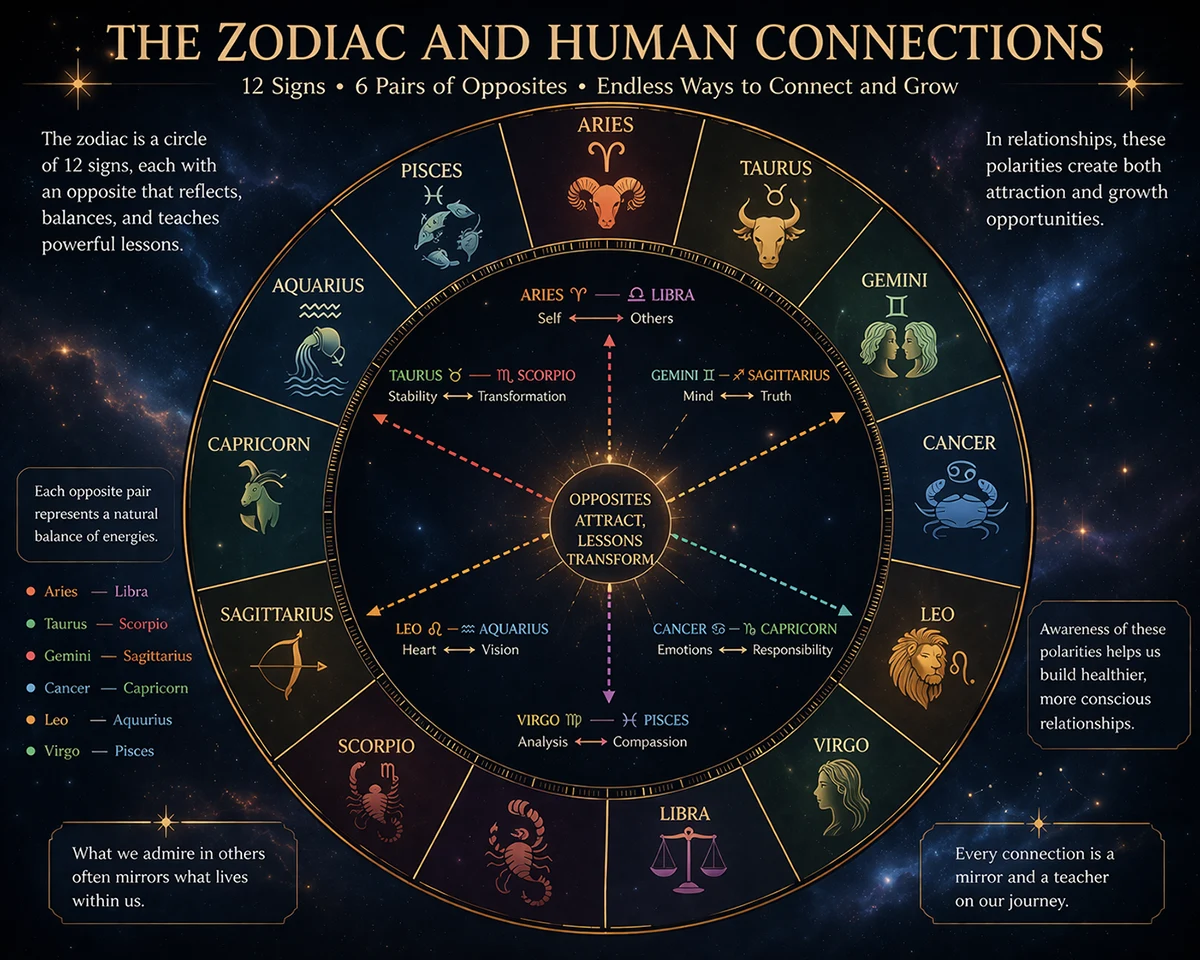
At its core, relationships define who we are. They are not limited to interactions with others; they also include our relationship with our own body, emotions, and thoughts. People in our lives often act as mirrors, reflecting back parts of ourselves—both the qualities we admire and the unresolved issues we need to address. What irritates us most in someone else frequently points to something we struggle with internally. Keeping this perspective in mind can transform conflicts into powerful opportunities for self-awareness and healing.
Key Principles in Relationship Astrology
Before diving into any partnership analysis, remember an important rule: nothing can manifest between two people unless the potential already exists in each individual’s natal chart. Connections form through shared planetary links, where planets or lights in one chart activate points in the other.
When studying a relationship, we assign meaningful roles to each person based on the context. We look at how one individual supports the other’s life path, what lessons they bring, and how the exchange of energy serves both souls in this lifetime.
Synastry: Comparing Two Birth Charts
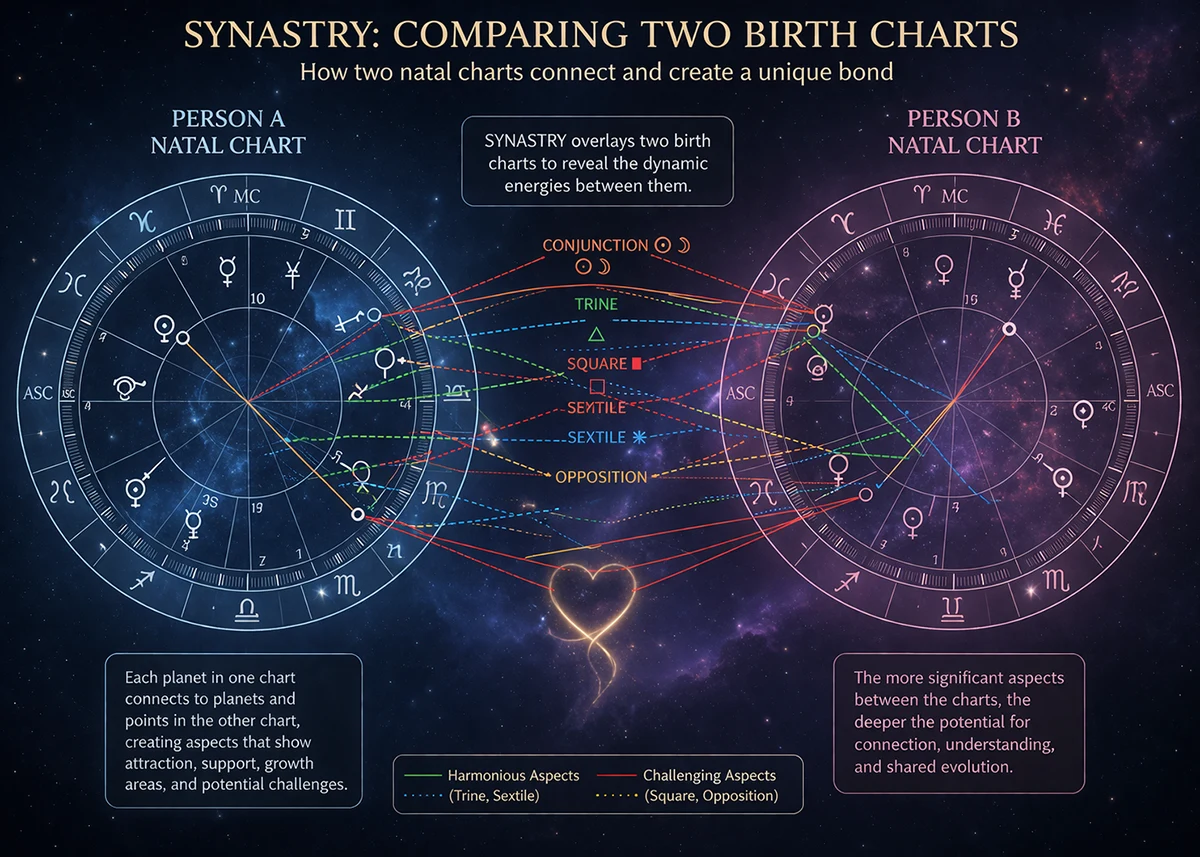
Synastry is the foundational technique in relationship astrology. It involves overlaying two natal charts to identify planetary aspects, house placements, and sign interactions between them.
When a planet in one chart forms a precise aspect with a planet in the other, it creates a significant energetic link. The more meaningful aspects present, the deeper the potential for learning and growth within the bond. Each planet adds its own flavor—for example, strong Venus connections often highlight love and affection, while dynamic Moon-Mars or Venus-Mars links can indicate passionate emotional or physical chemistry.
Another valuable layer in synastry is examining planetary rulerships and dispositions. If one person has their Moon in Capricorn, the position of the other person’s Saturn becomes especially important. A supportive placement (such as Saturn in Taurus) could help the first person develop emotional security, build lasting family values, and find inner stability they may naturally lack.
In romantic relationships, astrologers pay close attention to compatibility indicators involving the Sun, Moon, Venus, Mars, and the 7th house. These points reveal attraction, emotional needs, and long-term potential.
Composite Charts: The Birth Chart of the Relationship
Once synastry reveals the initial connections, many astrologers create a composite chart to understand the relationship as its own unique entity.
There are two main methods:
- Midpoint Composite: Planetary positions are calculated as the mathematical midpoint between the two individuals’ planets. This chart represents how the relationship is perceived and idealized from the outside.
- Davison (Time-Space) Composite: Positions are based on the exact midpoint in time and space between the two births. This creates a more “real” chart that reflects the actual lived experience of the partnership.
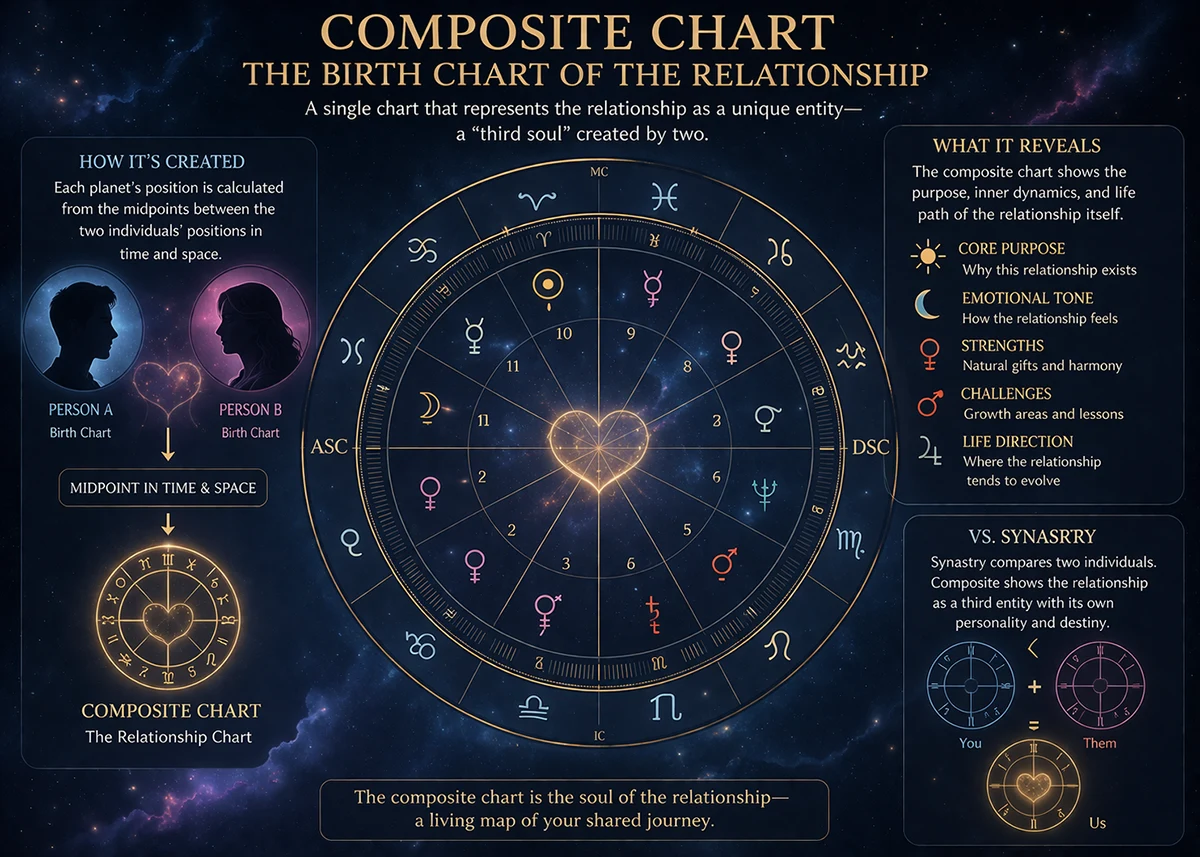
Together, these charts offer a fascinating view of the relationship as a “third entity”—something greater than the sum of its parts. They show the purpose of the bond, its strengths, challenges, and the direction it naturally tends to evolve.
Feminine and Masculine Energies in Relationships
Human relationships are deeply influenced by archetypal masculine and feminine principles, shaped by both society and collective consciousness. While every person carries both energies within them, traditional interpretations often assign roles based on gender in heterosexual partnerships:
- Feminine energy is commonly linked to the Moon (emotions, nurturing) and Venus (love, beauty, harmony).
- Masculine energy is associated with the Sun (identity, vitality) and Mars (action, passion, drive).
However, these roles are flexible. A woman in a strong teaching or leadership position might embody Jupiter’s expansive, guiding energy more prominently. Similarly, a creative or artistic man may express Venusian qualities with ease. Children are often viewed through Mercury, which carries a neutral, intellectual quality that transcends strict gender associations.
In same-sex relationships, roles are not automatically assigned by gender. Astrologers typically explore each partner’s natural tendencies through chart analysis and direct conversation. Factors such as age, personality description, and dominant planetary expressions help determine who leans more toward certain archetypal roles within the dynamic.
Practical Benefits of Relationship Astrology
Using these tools—synastry, composite charts, and awareness of energetic roles—can bring clarity to any type of relationship. It helps couples understand why certain patterns repeat, where communication flows easily, and which areas may require conscious effort and compromise.
Beyond romance, relationship astrology is equally valuable for:
- Parent-child dynamics
- Friendships and business partnerships
- Family relationships
- Understanding karmic or soul-level connections
Ultimately, astrology doesn’t predict failure or success. Instead, it illuminates the energetic blueprint of a relationship, empowering individuals to navigate it with greater awareness, compassion, and intention.
By viewing others as mirrors and relationships as sacred teachers, we can transform every interaction into a path of deeper self-understanding and personal evolution.
